Blaming AI is easy, fixing yourself is harder
A practical note on building Connie Croma Part Two with fewer illusions and better prompts
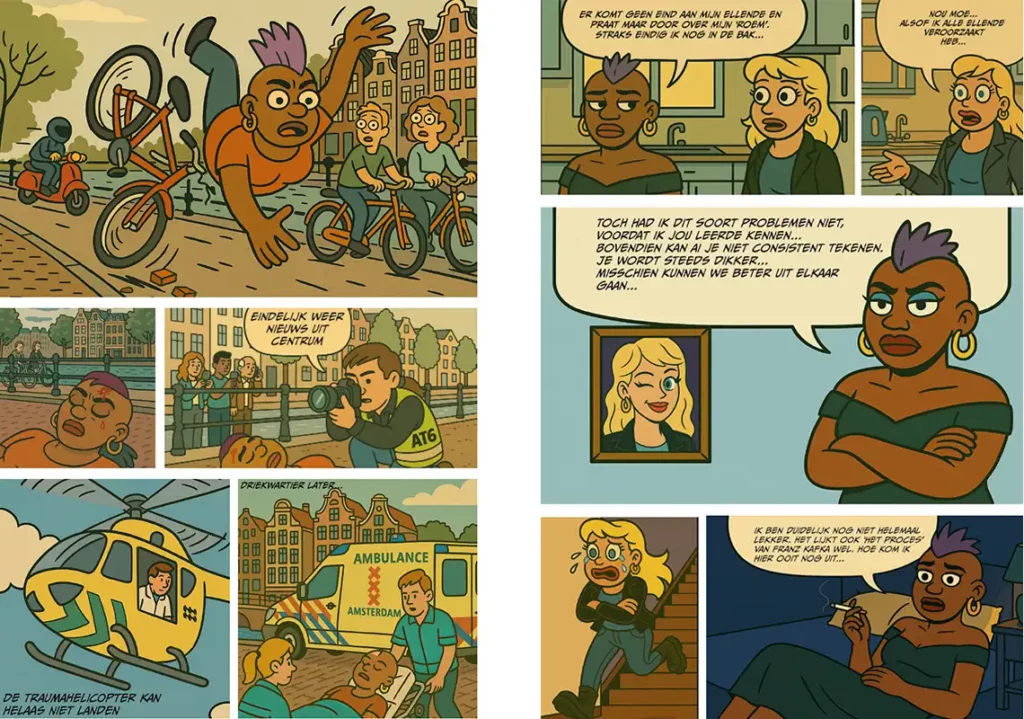
Today I set out to do something I am not entirely sure is wise. After publishing The Adventures of Connie Croma last year through Uitgeverij Norden, I am now attempting to create a second volume using AI, fully aware of the problems I ran into the first time.
I used OpenAI’s image generator, and two problems quickly emerged. One on the side of the creator, who is dyslexic and kept losing track of scene numbering, and one on the side of the image generator, which received structural updates almost weekly, sometimes even faster, causing visual output to change over time.
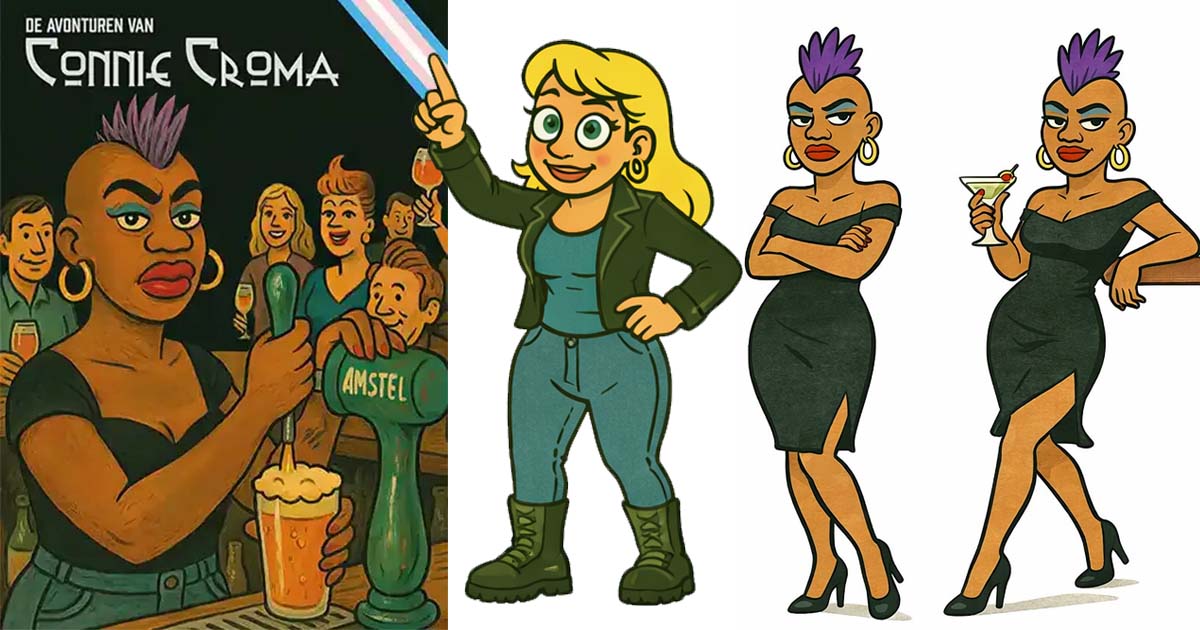
There was also the issue of character consistency. The two Dutch protagonists, Connie Croma and her sidekick, gradually began to look as if they consumed too many processed foods, becoming heavier and more compact by the day. Not the body type we associate with Hollywood, but certainly one we recognize from the many American tourists walking through the city.
That is the price one willingly pays for the opportunity to create a product at a very early stage of development, which, thanks to many manual interventions, eventually made it into print.
In processes like these, it helps to address your own shortcomings before complaining about an image generator that can save months of work.
So an AI-generated prompt generator was created to maintain unity and consistency. After filling in the required fields, a well-structured prompt can now be exported with a single click.
That is what I am currently testing. For now, we already have two character sheets of the main protagonists for The Adventures of Connie Croma, Part Two.